What Is a HIAB Truck and When Do You Need One?
If you've ever had a delivery of heavy building materials, machinery or bulky equipment turn up on a truck with its own crane, you've seen a HIAB in action. This plain-English guide explains what a HIAB truck is, how the crane works, and when it's the right choice for your freight.
What's covered in this guide:
- What is a HIAB truck? — a truck fitted with its own hydraulic crane.
- How does a HIAB crane work? — a knuckle-boom arm lifts loads over obstacles.
- When do you need a HIAB truck? — heavy loads with no forklift or dock on site.
- HIAB vs tail-lift vs Moffett — which unloading option suits your freight.
- Booking a HIAB with Quickcargo — instant quote, no sign-up.
- Frequently asked questions — quick answers to the common ones.
If you've ever had a delivery of heavy building materials, machinery or bulky equipment turn up on a truck with its own crane, you've seen a HIAB in action. But many businesses aren't sure what a HIAB truck actually is, how it differs from a tail-lift or forklift, or when it's the right choice. This guide explains it in plain English so you can book the right vehicle the first time.
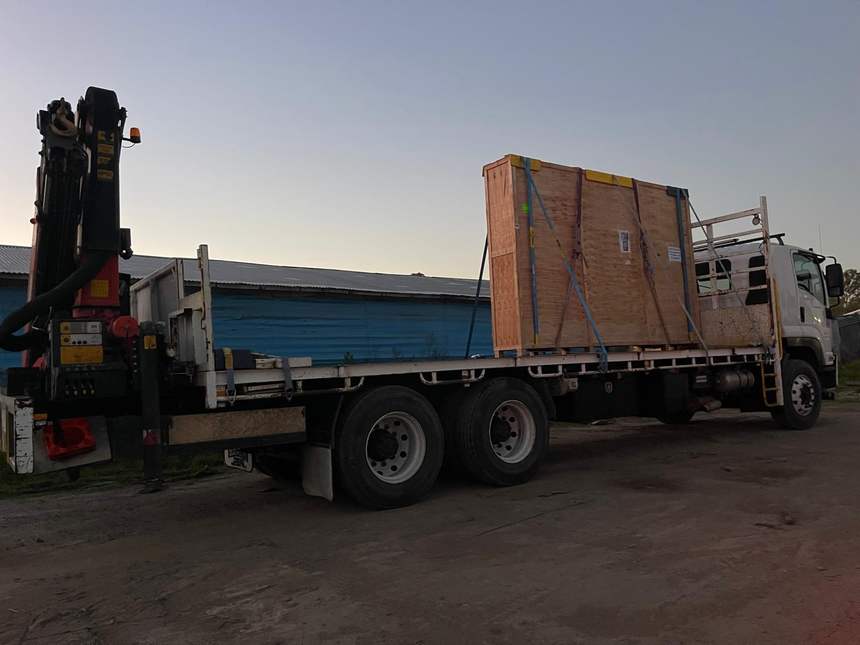
What is a HIAB truck?
A HIAB truck is a truck fitted with a hydraulic crane, usually mounted behind the cab or at the rear of the tray. The crane lifts heavy or awkward loads on and off the truck without needing a forklift, loading dock or crew of people to unload by hand.
The name comes from a Swedish manufacturer, Hydrauliska Industri AB, whose brand became so common that 'HIAB' is now used across Australia to describe almost any truck-mounted crane. You might also hear them called crane trucks, knuckle-boom trucks or vehicle loading cranes — for most purposes they mean the same thing.
How does a HIAB crane work?
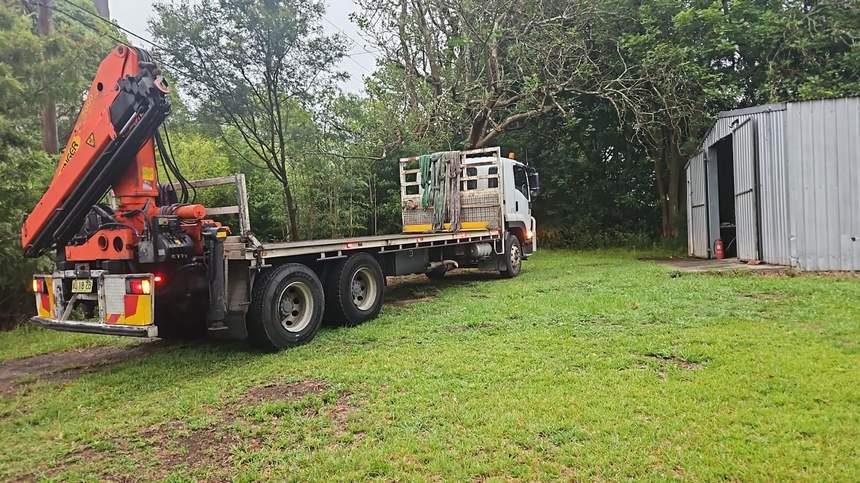
The crane runs off the truck's hydraulic system and is operated by the driver, either from controls on the truck or with a remote. Most cranes use a folding 'knuckle-boom' arm that extends outward and can reach over fences, garden beds or other obstacles to place a load exactly where it's needed.
Depending on the unit, a HIAB can typically:
- Lift loads up to around 2 tonnes, depending on the crane's rating and how far the arm has to reach.
- Reach several metres out and up, placing goods over obstacles rather than just beside the truck.
- Unload precisely onto uneven ground, a slab, scaffolding level or hard-to-access site.
Lifting capacity drops as the arm extends further out, so the right truck for your job depends on both the weight of the load and how far it has to reach.
When do you need a HIAB truck?
A HIAB is the right call whenever the load is too heavy or awkward to unload by hand, and there's no forklift or dock at the delivery point. Common situations include:
- Construction and building materials — steel, timber packs, bricks, pavers, concrete products and pre-cast panels delivered straight to site.
- Machinery and equipment — generators, pumps, industrial units and plant that need to be lifted into position.
- Landscaping supplies — bagged soil, rock, sleepers and large planters placed over fences into backyards.
- Sheds, tanks and pods — water tanks, container-style units and flat-pack structures set down in tight spots.
- Sites with no forklift or dock — anywhere the receiver can't unload the freight themselves.
If this sounds like your delivery, our HIAB truck services and construction material delivery pages cover exactly what we handle.
See pricing built around your exact freight and route — in under 60 seconds.
Get an instant quoteHIAB vs tail-lift vs Moffett: which do you need?
HIAB isn't the only way to unload heavy freight. Choosing the right one saves you time and money.
| Option | Best for |
|---|---|
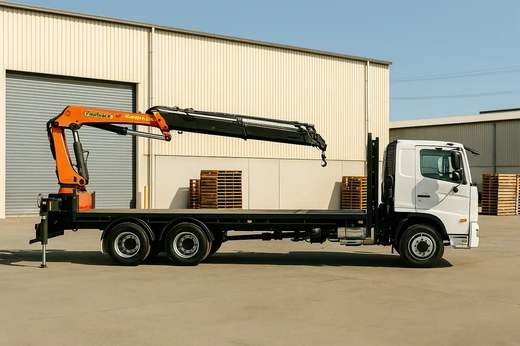
| HIAB (crane truck) | Heavy loads that need to be lifted up and over obstacles, or placed precisely on a site. Ideal for construction materials, machinery and anything landing somewhere a forklift can't reach. |
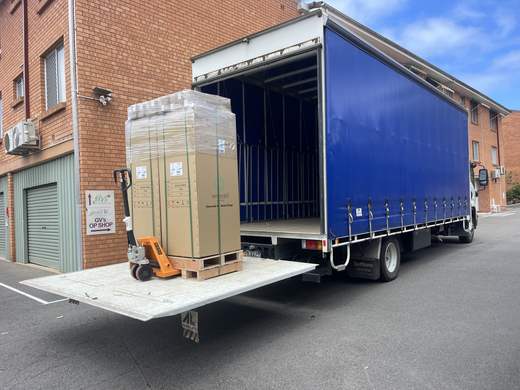
| Tail-lift truck | Palletised or wheeled goods that need to be lowered from the truck to ground level. Great for standard pallets at sites with no dock. |
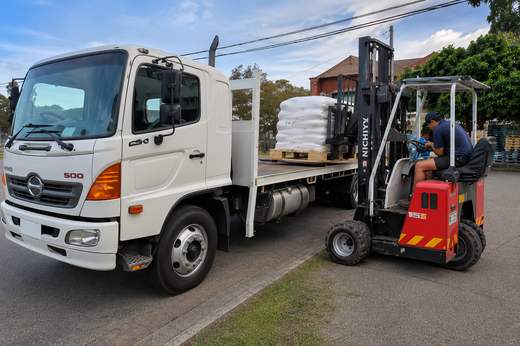
| Moffett (truck-mounted forklift) | Pallets that need to be carried away from the truck and placed on the ground or inside a building. The forklift travels on the back of the truck and unloads without any site equipment. |
HIAB (crane truck)
Best for heavy loads that need to be lifted up and over obstacles, or placed precisely on a site. Ideal for construction materials, machinery and anything landing somewhere a forklift can't reach.
Tail-lift truck
Best for palletised or wheeled goods that need to be lowered from the truck to ground level. The hydraulic platform at the rear does the lifting — great for standard pallets at sites with no dock. See our tail-lift truck services.
Moffett (truck-mounted forklift)
Best when you need to carry pallets away from the truck and place them on the ground or inside a building. The forklift travels on the back of the truck and unloads without any site equipment. See our Moffett truck services.
Not sure which suits your load? Tell us the weight, dimensions and what the delivery site looks like when you request a quote, and we'll match you with the right vehicle.
Booking a HIAB with Quickcargo
Booking a crane truck doesn't have to be complicated. With Quickcargo you get an instant online quote in under 60 seconds, no sign-up, real-time tracking and $500 of built-in freight cover as standard. We've handled deliveries for 6,000+ customers and hold a 4.9/5 rating, including plenty of site deliveries for builders, suppliers and importers.
Frequently asked questions
What does HIAB stand for?
What's the difference between a HIAB and a tail-lift?
How much weight can a HIAB truck lift?
Do I need a HIAB or a Moffett?
Can I hire a HIAB truck for a one-off delivery?
Ready to get moving?
Get an instant quote in under 60 seconds — no sign-up required.
Get your instant quote