FTL vs Backloading: Know the Difference (and When to Use Each)
Full truckload and backloading are two ways of buying the same movement. The gap between them is rarely about quality — it's about who controls the schedule. This guide covers what each is, what you save, what you give up, and which suits your freight.
If you've been quoted two very different prices for what looks like the same job, backloading is usually the reason. Full truckload and backloading are two ways of buying the same movement, and the gap between them is rarely about quality — it's about who controls the schedule. This guide covers what each is, what you save, what you give up, and which suits your freight.
What's covered in this guide
- What is a full truckload (FTL)? — the whole vehicle, start to finish.
- What is a backload? — paid space on a trip that's already happening.
- Express FTL vs General FTL — how we price the trade-off.
- FTL vs backloading at a glance — cost, timing and control side by side.
- When to choose each one — the decision rule that actually works.
- Lead times and interstate transit — realistic expectations.
- Frequently asked questions — quick answers to the common ones.
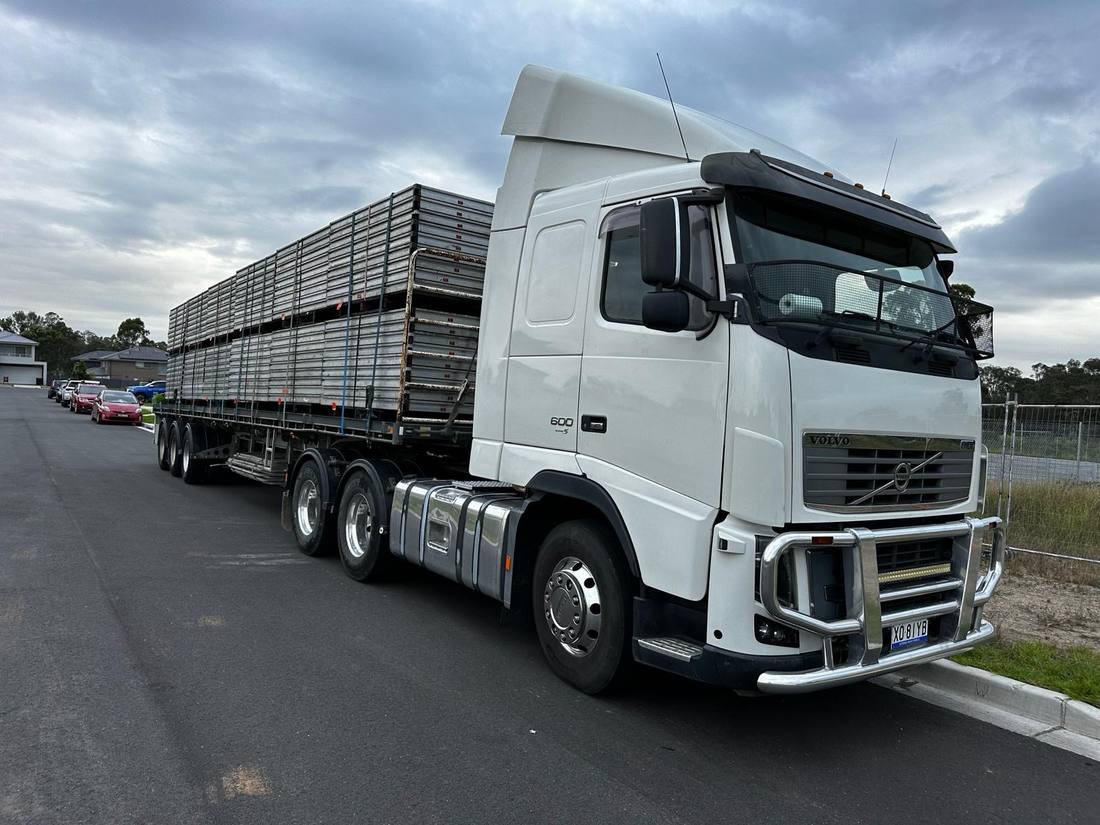
Industry estimates suggest close to a third of trucks on Australian roads run without cargo at any given time — and that empty space is where backloading comes from.
What is a full truckload (FTL)?
Full truckload means the vehicle is yours for the trip. Your freight is loaded at the origin, the truck drives to the destination, and nothing else goes on board along the way. No depot handling, no cross-docking, no consolidation with anyone else's pallets.
You're buying capacity and certainty. The truck leaves when you need it to, takes a direct route, and your goods are handled twice — once on, once off. For fragile, high-value, oversized or deadline-driven freight, that reduced handling is often worth more than the difference in rate.
It helps to know what a trailer actually holds, because the configuration decides both your pallet count and your maximum load height.
| Trailer configuration | Standard pallets | Max load height |
|---|---|---|
| Semi — straight deck | 22 | 2.6 m |
| Semi — drop deck | 22 | 3.3 m |
| Semi — mezzanine | 38 | 1.4 m per deck |
| B-double — straight deck | 34 | 2.6 m |
| B-double — mezzanine | 56 | 1.4 m per deck |
A tautliner comes in all three configurations. A mezzanine adds a second deck, which is why the pallet count jumps — but each pallet has to stay under 1.4 m so two fit in the space of one. A drop deck sits lower to the road, so it carries the same pallet count as a straight deck while taking freight up to 3.3 m — the one to ask for with tall machinery or equipment. For anything oversized or awkward, a flat-top is the open-deck option.
Industry guidance puts the crossover — where a full truckload rate starts beating per-pallet pricing — between 8 and 14 pallets, shifting with the lane and freight density. Below that, general freight or pallet delivery usually wins.
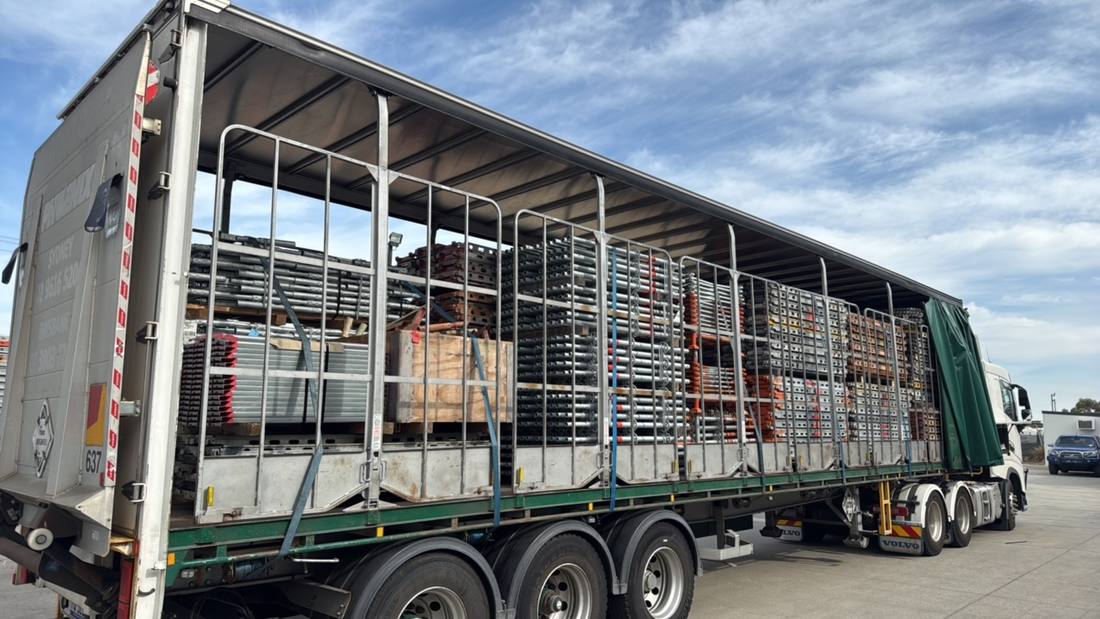
Full truckload means the trailer is yours end to end — nothing else goes on board along the way.
What is a backload?
A backload — or return load — is freight that fills a truck already making the trip. A vehicle that runs Sydney to Melbourne loaded still has to get back. If it returns empty, the operator wears the cost of that leg with nothing to show for it, so selling the space cheaply beats running empty.
That's the whole economics of it, and it's why the savings are real rather than a discount gimmick. You aren't getting a lesser truck or a lesser driver — you're getting space on a movement that was happening anyway.
The catch is that you don't set the timetable. Your freight moves when a suitable truck is heading your way with room on it. Directional imbalance is a documented feature of the Australian network, so the quiet direction on a lane is where the sharpest rates sit.
Express FTL vs General FTL
Quickcargo prices this exact trade-off into two full truckload services:
- Express FTL — your schedule. We dispatch the first available truck to meet your pickup and delivery timing, even if there's no return load to pair it with. That's why it costs more.
- General FTL — our schedule. You still get a dedicated truck with zero depot handling, but it departs on our next planned run for that route, which lets us pair it with a return load. Pickup is usually within one to three days, and the rate is lower.
One distinction worth being clear on: General FTL isn't a shared truck. You're not buying leftover space beside someone else's freight — you're buying a whole vehicle on a day that suits the network. That's backload economics applied to a dedicated truck, which for most businesses is the sweet spot.
FTL vs backloading at a glance
| Full truckload | Backloading | |
|---|---|---|
| What you're buying | The whole vehicle, exclusively | Spare space on a trip already scheduled |
| Cost | Higher — you fund the full vehicle | Lower, often substantially |
| Schedule control | You pick the pickup day | You fit the truck's existing run |
| Certainty | High — direct, no depot stops | Depends on return legs being available |
| Typical notice | Short notice workable | One to two weeks preferred |
| Best for | Urgent, fragile, oversized, full loads | Flexible timing and cost-driven moves |
See pricing built around your exact freight and route — in under 60 seconds.
Get an instant quoteWhen to choose each one
Go full truckload when…
- There's a hard date. An install, a slab pour, a production line waiting on parts — anything where arriving late costs more than the freight itself.
- The goods are fragile or high-value. Fewer touches means less opportunity for damage, and your consignment never sits in a depot.
- The load is oversized or awkward. Long lengths, machinery and crated equipment need a dedicated tray, not the gap left on a returning trailer.
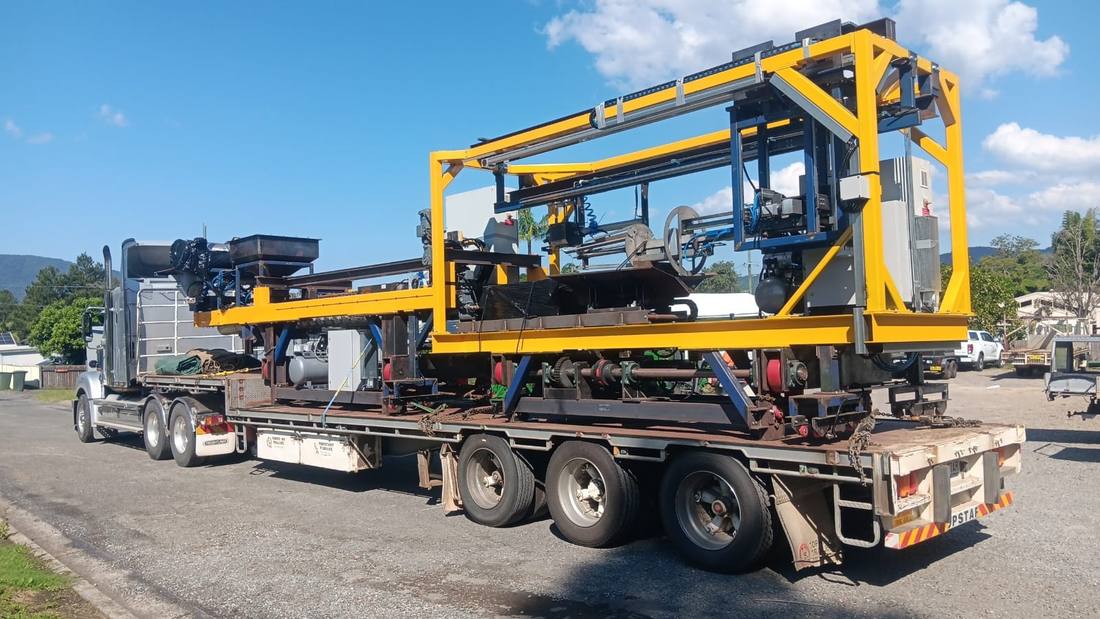
Machinery and oversized freight is classic full truckload territory — a drop-deck gives the height clearance a standard tray can't.
Take the backload when…
- Your timing is a window, not a date. If "sometime in the next fortnight" is genuinely fine, you're the ideal backload customer.
- Cost is the deciding factor. Stock replenishment, non-urgent transfers and seasonal repositioning all suit it.
- You're shifting volume without a deadline. Relocating a warehouse, or moving surplus stock between sites.
- You're sending things back. Empty pallets, packaging, returned equipment and demo stock rarely justify a dedicated truck.
What you save — and what it costs you
The saving is real, but it isn't a fixed percentage — be sceptical of anyone quoting one before they've seen your job. Operators commonly advertise 30 to 50 per cent against a dedicated run. Treat that as a marketing figure, not a rate card: what you pay turns on the lane, the direction and how much spare capacity is running that week.
What you give up is certainty, and it's worth being clear-eyed about it:
- A wider pickup window rather than a set day.
- Less room to change details late without losing your spot.
- Occasionally no suitable truck at all — so you wait, or switch to a dedicated run.
If a missed date costs you more than the gap between the two quotes, the numbers favour full truckload — even when the backload price looks better on paper. Freight is cheap compared with an idle crew or a stalled production line.
Lead times and interstate transit
These are two different clocks, and confusing them is where expectations come unstuck.
Lead time is how long you wait for a truck. Third-party backloads typically want one to two weeks' notice, or more interstate. General FTL is quicker off the mark, with pickup usually inside one to three days.
Transit time is how long the trip takes once you're loaded, and here backloading changes nothing. Interstate transit comes down to the lane: Sydney to Melbourne and Sydney to Brisbane run next day, while Brisbane to Melbourne takes two days. Adelaide and Perth corridors run several times a week rather than daily, so those need a little more planning.
Same-day delivery is a metro proposition: within Sydney, Melbourne or Brisbane a dedicated vehicle can have goods across town in hours.
How to book either option with Quickcargo
- Enter your pickup and delivery. Postcodes are enough to start.
- Tell us the load. Pallet count, weight and dimensions — and mention if your dates can move, because that's what opens up the cheaper options.
- Compare and book. See your options in seconds, book online without an account, and track the consignment in real time.
Every booking carries $500 of built-in freight cover, and more than 6,000 Australian businesses rate us 4.9 out of 5. If you ship regularly, a free business account gets you discounted rates on every booking. Prefer to talk it through? Call 02 7257 7345. For palletised freight that doesn't fill a trailer, our pallet delivery service is often the better middle ground.
Frequently asked questions
What is a backload in freight?
Is backloading cheaper than a full truckload?
How much notice do I need for a backload?
Is backloading riskier for my freight?
Can I backload machinery or oversized freight?
Ready to get moving?
Get an instant quote in under 60 seconds — no sign-up required.
Get your instant quote