Pallet Freight from Melbourne to Brisbane: Costs, Transit Times and Tips
Moving pallets from Melbourne to Brisbane is one of the busiest freight lanes in the country. This guide covers what it really costs, how long it takes, and how to prepare your freight so it arrives on time and undamaged. 30 July 2026 4 min read
- Transit time: allow 2–4 business days — it's a ~1,700 km interstate haul, so next-day isn't realistic.
- Cost: no flat rate; it's driven by pallet count, weight, dimensions (cubic vs actual) and how it's unloaded.
- Cheapest option: general palletised freight, kept stackable and delivered to a business address with a forklift.
- Packing: a sound pallet, load within the footprint and tight wrapping prevent most damage over the distance.
- Next step: get an instant quote in under 60 seconds — no sign-up.
Moving pallets from Melbourne to Brisbane is one of the busiest freight lanes in the country, and one of the easiest to get wrong if you don't plan for the distance. At roughly 1,700 km by road, this is a true interstate haul, so pricing, transit times and packing all work differently to a metro run. This guide breaks down what pallet freight from Melbourne to Brisbane really costs, how long it takes, and how to prepare your freight so it arrives on time and undamaged.
How long does freight take from Melbourne to Brisbane?
Melbourne to Brisbane is a multi-day interstate route. As a general rule, allow 2 to 4 business days for palletised general freight travelling through a carrier network, depending on pickup cut-off times, the exact suburbs at each end, and how freight is consolidated for the run.
A few things that affect your transit time:
- Pickup and delivery suburbs — metro-to-metro is quicker than runs that finish in regional Queensland or outer Victoria.
- Booking cut-off — freight booked before the daily cut-off is dispatched sooner than freight booked late in the day.
- Freight type — standard palletised goods move faster than oversized, non-conforming or dangerous goods that need special handling.
Need it there faster than the network allows? Express and dedicated-vehicle options are available for time-critical loads. Just remember: on a route this long, no honest carrier can promise next-day interstate delivery — anyone who does is over-promising. Plan around a realistic 2 to 4 day window and build in a buffer for critical deadlines.
What does pallet freight from Melbourne to Brisbane cost?
There's no single flat rate for this lane, because your price is built from the specifics of your consignment. The biggest cost drivers are the number of pallets, their weight, and their dimensions — carriers charge on whichever is greater between actual weight and cubic (volumetric) weight.
The main factors in your quote
- Number of pallets — a single pallet costs more per unit than a consolidated load of several.
- Weight vs cubic — a light but bulky pallet may be priced on its volume, not its scale weight.
- Pallet size and stackability — standard, stackable pallets are the most economical; oversized or non-stackable freight costs more.
- Pickup and delivery type — business addresses with a forklift or dock are cheaper than residential or hand-unload jobs that need a tail-lift.
- Time sensitivity — standard network freight is the most cost-effective; express and dedicated vehicles cost more for the speed and certainty.
How to prepare your pallets for the interstate run
Freight that travels 1,700 km is handled and moved far more than a local delivery, so good preparation is the difference between a clean delivery and a damage claim. A few simple habits make a big difference.
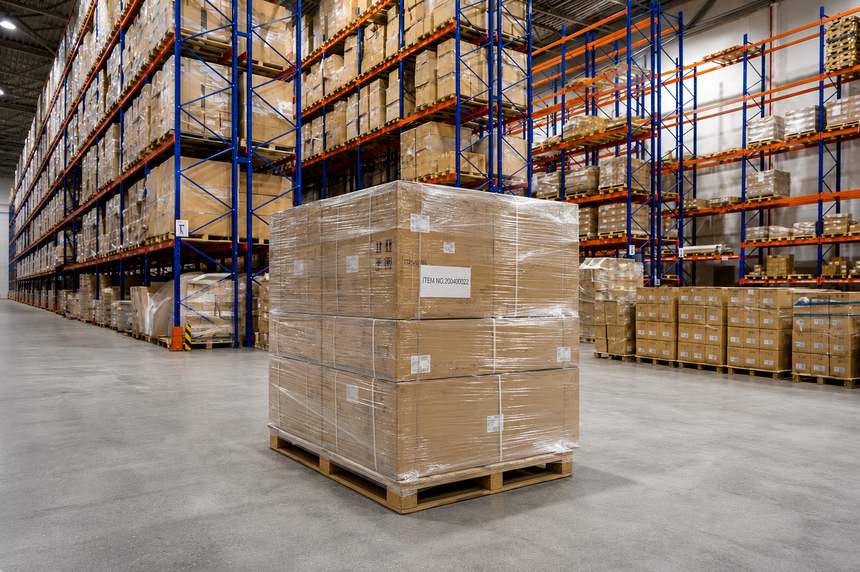
- Use a sound pallet. Choose a sturdy standard pallet (1165 x 1165 mm is common in Australia) with no broken boards or protruding nails.
- Keep the load within the footprint. Stack goods squarely so nothing overhangs the edges — overhang is the number one cause of edge damage in transit.
- Distribute weight evenly. Put heavier items on the bottom and lighter items on top to keep the pallet stable.
- Wrap and strap properly. Use several tight layers of stretch wrap anchored to the pallet base, and add strapping for heavy or high loads.
- Label clearly. Mark each pallet with the delivery address and contact, and flag anything fragile or 'this way up'.
For a full walkthrough of stacking, wrapping and weight limits, see our pallet delivery services page.
See pricing built around your exact freight and route — in under 60 seconds.
Get an instant quoteChoosing the right service for your Melbourne–Brisbane freight
The best option depends on how quickly you need it there and how it's being unloaded at the other end.
- General (palletised) freight — the cost-effective default for most business-to-business pallet shipments where a 2–4 day window works.
- Express / dedicated vehicle — for urgent or high-value loads that need to move on a fixed timeline with fewer touch points.
- Tail-lift or HIAB delivery — essential when the delivery point has no forklift or loading dock, or the freight is heavy and needs craning off.
If you regularly ship this lane, our dedicated interstate freight and Brisbane to Melbourne route pages cover the options in more detail.
Protecting your freight
Every Quickcargo consignment includes $500 of built-in freight cover, and real-time tracking so you can follow your pallets the whole way. For higher-value loads you can add extra protection — see our freight insurance page for what's covered. With 6,000+ customers and a 4.9/5 rating, we've moved a lot of freight up and down the east coast.
Frequently asked questions
How much does it cost to ship a pallet from Melbourne to Brisbane?
How long does pallet freight take from Melbourne to Brisbane?
Can I get same-day delivery between Melbourne and Brisbane?
What's the cheapest way to send pallets interstate?
Is my freight insured on the Melbourne to Brisbane route?
Ready to get moving?
Get an instant quote in under 60 seconds — no sign-up required.
Get your instant quote